EGFR Antibody
Rabbit Polyclonal
$50.00 to US & $70.00 to Canada for most products. Final costs are calculated at checkout.
Background
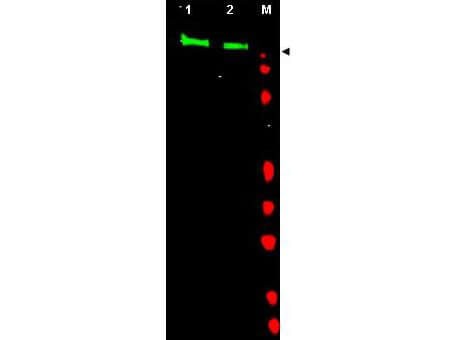
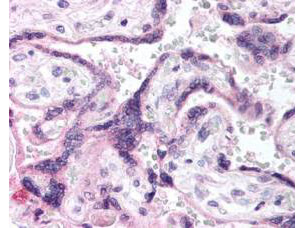
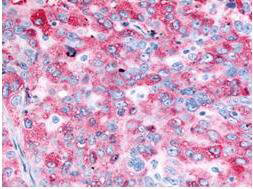
EGFR is a transmembrane glycoprotein that is a member of a family of protein tyrosine kinases crucial to maintaining a normal balance in cell growth and development. Growth factor receptors are involved not only in promoting the proliferation of normal cells but also in the aberrant growth of many types of human tumors. For example, the epidermal growth factor receptor (EGFR) is mutated and/or over-expressed in many common solid human squamous cell carcinomas including breast, brain, bladder, lung, gastric, head & neck, esophagus, cervix, vulva, ovary, and endometrium. Over-expression of the EGFR gene occurs in carcinomas with and without gene amplification. EGFR and ErbB-2 are particularly important in breast cancer because increased production or activation has been associated with poor prognosis. EGFR belongs to a family of growth factor receptors, which also includes ErbB-2/HER-2/neu, ErbB-3/HER-3/neu and ErbB-4/HER-4/neu. EGFR can heterodimerize with each of the members of this family.
Product Details
Target Details
Application Details
Formulation
Shipping & Handling
This product is for research use only and is not intended for therapeutic or diagnostic applications. Please contact a technical service representative for more information. All products of animal origin manufactured by Rockland Immunochemicals are derived from starting materials of North American origin. Collection was performed in United States Department of Agriculture (USDA) inspected facilities and all materials have been inspected and certified to be free of disease and suitable for exportation. All properties listed are typical characteristics and are not specifications. All suggestions and data are offered in good faith but without guarantee as conditions and methods of use of our products are beyond our control. All claims must be made within 30 days following the date of delivery. The prospective user must determine the suitability of our materials before adopting them on a commercial scale. Suggested uses of our products are not recommendations to use our products in violation of any patent or as a license under any patent of Rockland Immunochemicals, Inc. If you require a commercial license to use this material and do not have one, then return this material, unopened to: Rockland Inc., P.O. BOX 5199, Limerick, Pennsylvania, USA.