SMAD3 phospho S423/phospho S425 Antibody
Rabbit Polyclonal
$50.00 to US & $70.00 to Canada for most products. Final costs are calculated at checkout.
Background
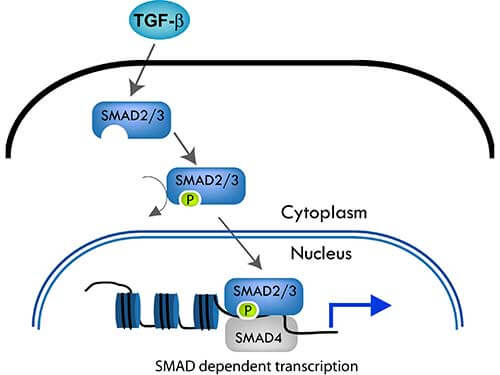
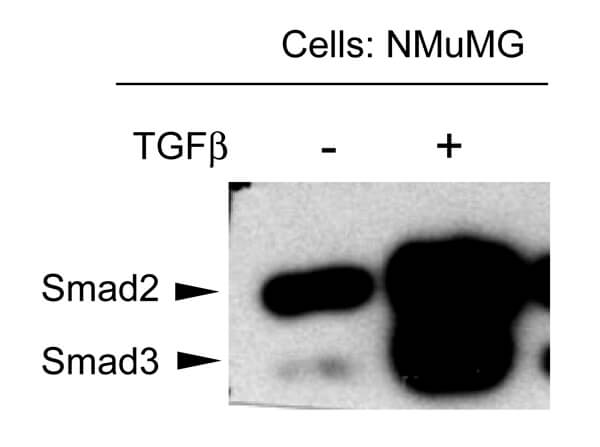
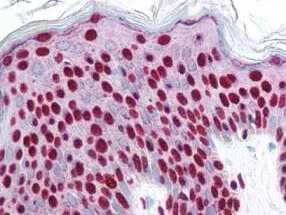
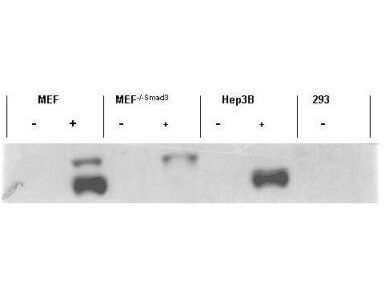
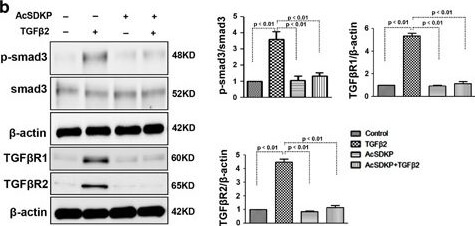
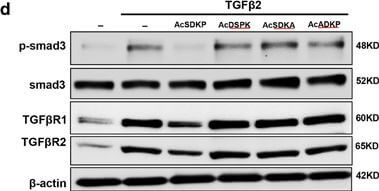
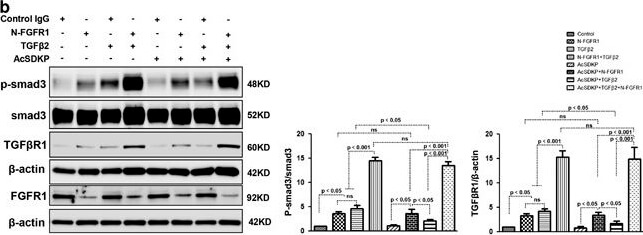
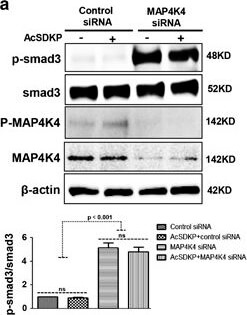
This antibody is designed, produced, and validated as part of a collaboration between Rockland and the National Cancer Institute (NCI) and is suitable for Cancer, Immunology and Nuclear Signaling research. Smad3 (also known as Mothers against decapentaplegic homolog 3 Mothers against DPP homolog 3, Mad3, hMAD-3, JV15-2 or hSMAD3) is a transcriptional modulator activated by TGF-beta (transforming growth factor) and activin type 1 receptor kinase. These activators exert diverse effects on a wide array of cellular processes. The Smad proteins mediate much of the signaling responses induced by the TGF-b superfamily. Briefly, activated type I receptor phosphorylates receptor-activated Smads (R-Smads) at their c-terminal two extreme serines in the SSXS motif, e.g. Smad2 and Smad3 proteins in the TGF-b pathway, or Smad1, Smad5 or Smad8 in the BMP pathway. Then the phosphorylated R-Smad translocated into nucleus, where they regulate transcription of target genes. Based on microarray and animal model experiments, Smad3 accounts for at least 80% of all TGF-b-mediated response.
Product Details
Target Details
Application Details
Formulation
Shipping & Handling
This product is for research use only and is not intended for therapeutic or diagnostic applications. Please contact a technical service representative for more information. All products of animal origin manufactured by Rockland Immunochemicals are derived from starting materials of North American origin. Collection was performed in United States Department of Agriculture (USDA) inspected facilities and all materials have been inspected and certified to be free of disease and suitable for exportation. All properties listed are typical characteristics and are not specifications. All suggestions and data are offered in good faith but without guarantee as conditions and methods of use of our products are beyond our control. All claims must be made within 30 days following the date of delivery. The prospective user must determine the suitability of our materials before adopting them on a commercial scale. Suggested uses of our products are not recommendations to use our products in violation of any patent or as a license under any patent of Rockland Immunochemicals, Inc. If you require a commercial license to use this material and do not have one, then return this material, unopened to: Rockland Inc., P.O. BOX 5199, Limerick, Pennsylvania, USA.